
Yes. Seasonal employees in California generally receive the same core workplace protections as other employees when they are legally classified as employees. These protections can include minimum wage, overtime for nonexempt work, meal and rest breaks, paid sick leave when eligibility requirements are met, protection from unlawful discrimination and retaliation, workers’ compensation coverage, and final wage rights.
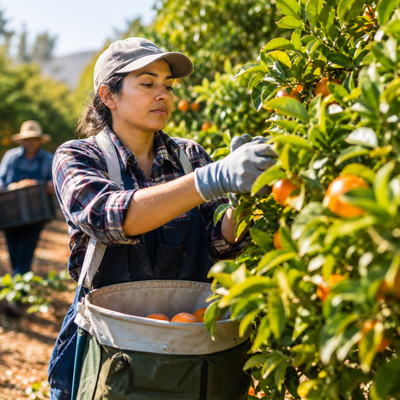
A seasonal label does not give an employer permission to ignore California wage laws or workplace protections. Some rights depend on how long you have worked, the number of hours you have worked, the employer’s size, your industry, your classification as exempt or nonexempt, and whether a specific legal exception applies.
The Myers Law Group represents employees across California, including workers in short-term, temporary, and seasonal positions. If you have questions about a seasonal job, the key issue is usually your legal status and the facts of your employment, not simply whether the position was expected to last only a few weeks or months.

David P. Myers
Managing Partner

Adam N. Stern
Attorney

Ann Hendrix
Attorney

Robert Kitson
Attorney

Justin Crane
Attorney

Doug Smith
Attorney

Jason Hatcher
Attorney

Morgan J. Good
Attorney

Alvin Ferrara
Attorney
What Is a Seasonal Employee in California?
A seasonal employee is generally someone hired for a limited period because an employer expects a temporary increase in business activity. Seasonal hiring is common in retail, hospitality, agriculture, warehousing, tourism, delivery operations, entertainment, and event staffing.
For example, a retailer may add workers during the holiday shopping season, a warehouse may increase staffing during peak shipping months, or a Santa Barbara hospitality business may hire additional employees during periods of increased tourism.
California law does not create a broad category of workers who lose basic employment protections simply because their jobs are seasonal.
If you are legally classified as an employee, California employment laws generally apply unless a specific exemption, wage order, collective bargaining agreement, or industry rule changes the result.
For a broader overview of California workplace protections, visit:
https://www.myerslawgroup.com/california-employment-law-attorneys/
Related Videos
Choosing an Employment Law Attorney
Recovering Damages in an Employment Law Claim
Seasonal Workers Must Still Receive the Required Minimum Wage
Seasonal employees are generally entitled to the applicable California minimum wage.
The fact that you were hired for only a short period does not allow an employer to pay less than the legally required wage. Local minimum wage ordinances may also apply in certain California cities and counties.
Employers must also provide accurate itemized wage statements containing required information, which can include hours worked, applicable rates of pay, gross and net wages, deductions, and other information required by California law.
Problems can arise when employers incorrectly assume that temporary employees, holiday workers, or short-term staff fall outside ordinary wage rules.
Examples can include:
- Paying a flat daily rate that does not cover all compensable hours
- Requiring you to work before clocking in
- Requiring you to continue working after clocking out
- Failing to pay for mandatory meetings or training
- Making improper deductions from your wages
- Failing to include required forms of compensation when calculating overtime
Your job may be temporary, but your right to be paid for compensable work is not temporary.
Seasonal Employees May Be Entitled to Overtime
Most nonexempt seasonal employees are protected by California overtime laws.
In general, California requires overtime pay for covered nonexempt employees who work more than eight hours in a workday or more than 40 hours in a workweek. California law can also require overtime for work on a seventh consecutive day in a workweek. Double-time rules can apply in certain situations, including qualifying hours worked beyond 12 hours in a workday.
Seasonal status does not eliminate these requirements.
Consider a worker hired at a Rancho Cucamonga distribution facility during a holiday shipping surge. If that employee works ten hours in one workday and is properly classified as nonexempt, the employer generally cannot avoid overtime requirements simply because the employee was hired for only several weeks.
Certain industries, occupations, exemptions, alternative workweek schedules, and collective bargaining agreements can affect overtime obligations. The specific facts should be reviewed before deciding whether overtime is owed.
If you believe you have unpaid overtime, visit:
https://www.myerslawgroup.com/california-overtime-law-attorneys/
Results
Meal and Rest Break Rights Still Apply to Many Seasonal Employees
Seasonal employees who are covered by California meal and rest break rules generally have the same break rights as other covered employees.
For many nonexempt employees, California requires a meal period of at least 30 minutes when the work period is more than five hours. A second meal period can be required when an employee works more than ten hours in a day. Limited waiver rules and industry-specific exceptions can apply.
California also generally requires covered nonexempt employees to receive paid rest periods. The standard rule is a net ten-minute rest period for each four hours worked or major fraction of four hours. A rest period generally is not required when total daily work time is less than three and one-half hours.
Busy seasons do not create a general exception to these rules.
A retail store may have long customer lines during December. A hotel may experience increased demand during a tourism period. A warehouse may face strict shipping deadlines. Those business pressures do not automatically allow an employer to prevent covered employees from taking required breaks.
Problems can arise when you are told to:
- Skip lunch because the workplace is understaffed
- Remain on duty during an unpaid meal period
- Work through rest breaks
- Clock out while continuing to perform job duties
- Take required breaks substantially later because of workload
Whether a violation occurred depends on your schedule, industry, job duties, applicable wage order, and any lawful exception.
Paid Sick Leave Can Apply to Seasonal Employees
Many seasonal employees can qualify for California paid sick leave.
Under California’s statewide paid sick leave law, a covered employee generally must work for the same employer for at least 30 days within a year in California. An employee generally must also satisfy a 90-day employment period before using accrued paid sick leave, unless the employer allows earlier use.
This rule can be especially relevant for workers who return to the same employer during recurring seasonal periods.
If you leave an employer and return to the same employer within 12 months, California law generally requires previously accrued and unused paid sick leave to be restored, subject to applicable exceptions. For example, restoration may not be required when sick leave was provided through a qualifying paid time off policy and the unused balance was paid out when the earlier employment ended.
Seasonal employment does not automatically eliminate paid sick leave protections.
You should consider keeping copies of:
- Pay stubs
- Sick leave balances
- Employee handbook provisions
- Written leave requests
- Messages or emails regarding sick leave
- Notices showing changes to your schedule after requesting leave
Seasonal Employees Can Be Protected From Workplace Discrimination
California’s Fair Employment and Housing Act, commonly called FEHA, prohibits covered employers from discriminating against employees based on protected characteristics.
FEHA’s employment discrimination provisions generally apply to private employers with five or more employees and to public employers. California regulations also recognize that a seasonal business can meet the employee-count requirement when it regularly employs five or more employees during its operating season.
Protected characteristics can include race, religious creed, color, national origin, ancestry, physical disability, mental disability, medical condition, genetic information, marital status, sex, gender, gender identity, gender expression, sexual orientation, reproductive health decision-making, military or veteran status, and age for workers who are 40 or older, among other protections recognized by law.
The short duration of a seasonal job does not give a covered employer permission to discriminate.
For example, an employer should not use the end of a busy season as a false explanation for terminating workers because of a protected characteristic.
Warning signs can include situations where:
- Workers from one protected group are released while similarly situated employees remain
- You are removed from the schedule after requesting a disability accommodation
- Your shifts are reduced after you disclose a pregnancy
- You experience harassment based on a protected characteristic
- Management treats you differently after you report discrimination
The facts and documentation surrounding an employment decision often determine whether further investigation is warranted.
Seasonal Workers Are Also Protected From Retaliation
California law protects employees from certain forms of retaliation when they engage in legally protected activity.
A seasonal employee may have legal protection when raising concerns about unpaid wages, discrimination, harassment, unsafe working conditions, workers’ compensation rights, paid sick leave, or other workplace rights protected by law.
An employer should not punish you merely because you exercised a protected right.
Possible signs of retaliation can include:
- Sudden reductions in scheduled hours
- Unexplained negative performance reviews
- Removal from desirable assignments
- Discipline shortly after a complaint
- Threats related to reporting workplace problems
- Termination soon after protected activity
Timing alone does not prove retaliation. Timing combined with other evidence, such as inconsistent explanations, different treatment of comparable workers, or messages connecting the complaint to an adverse action, can be relevant.
If you are concerned about retaliation, visit:
https://www.myerslawgroup.com/california-retaliation-lawyers/
Workers’ Compensation Can Cover Seasonal Employees
Seasonal and temporary workers can qualify for California workers’ compensation benefits when they suffer a work-related injury or illness.
California’s Division of Workers’ Compensation states that temporary and part-time workers may be eligible for benefits. Workers’ compensation benefits can include medical care, temporary disability payments when an injury causes qualifying wage loss, permanent disability benefits in appropriate cases, supplemental job displacement benefits, and death benefits for qualifying dependents.
A seasonal worker could be injured while:
- Lifting inventory
- Loading or unloading deliveries
- Stocking merchandise
- Repeatedly packing products
- Working in a restaurant or hotel
- Performing agricultural labor
- Setting up or dismantling event equipment
- Driving or traveling while performing assigned work
For example, a worker hired temporarily to move holiday inventory may suffer a back injury while lifting heavy boxes. The fact that the assignment was scheduled to end several weeks later does not automatically prevent the worker from pursuing workers’ compensation benefits.
Seasonal work can also affect the calculation of temporary disability benefits because wages may fluctuate or work may be available only during part of the year.
For more information, visit:
https://www.myerslawgroup.com/california-workers-compensation-lawyers/
When Seasonal Status Can Affect Employee Rights
Seasonal employees have substantial protections, but not every employment right applies immediately.
Some protections depend on eligibility requirements, including:
- Length of employment
- Number of hours worked
- Employer size
- Whether you are exempt or nonexempt
- Industry-specific wage rules
- Collective bargaining agreements
- Eligibility requirements for a particular form of protected leave
Family and medical leave protections are one example.
Under the California Family Rights Act, commonly called CFRA, an eligible employee generally must have worked for the employer for at least 12 months, completed at least 1,250 hours of service during the previous 12 months, and work for an employer with five or more employees.
The federal Family and Medical Leave Act, commonly called FMLA, also generally requires at least 12 months of employment and 1,250 hours of service during the preceding 12 months. Federal coverage also includes employer-size and worksite requirements that differ from CFRA.
A worker who has been employed for only several weeks may not qualify for every form of family or medical leave even though that worker remains protected by wage laws, applicable anti-discrimination laws, workers’ compensation protections, and other employment laws.
This distinction is why you should focus on the specific right involved instead of assuming that every seasonal employee has identical eligibility for every employment benefit.
What Happens When the Seasonal Job Ends?
Employers can generally hire workers for legitimate short-term needs and end those positions when the seasonal need ends.
That does not mean every termination described as an “end of season” is automatically lawful.
An employer cannot use a seasonal layoff as a cover for unlawful discrimination, retaliation, or another prohibited reason.
Suppose an employer tells several workers that their seasonal assignments have ended but keeps other workers who were hired at the same time. If the workers selected for termination recently complained about unpaid wages, harassment, discrimination, or another protected issue, the circumstances may deserve closer examination.
You should consider preserving records showing:
- Hiring dates
- Work schedules
- Job assignments
- Performance reviews
- Complaints made to supervisors or human resources
- Messages about continued employment
- Communications explaining why the job ended
- Information showing which seasonal workers were retained
If you believe an employer used seasonal status as a pretext for an unlawful termination, visit:
https://www.myerslawgroup.com/california-wrongful-termination-lawyers/
Final Pay Rights Can Apply When Seasonal Employment Ends
California has strict rules concerning payment of earned wages when employment ends.
If an employer discharges an employee, wages that are due generally must be paid at the time of termination. If an employee without a written contract for a definite period quits without giving at least 72 hours’ notice, final wages generally must be paid within 72 hours. If that employee gives at least 72 hours’ notice, final wages generally must be paid at the time of quitting.
Special rules can apply in certain industries and employment arrangements.
Seasonal employees should review their final paycheck carefully.
Potential problems can include:
- Missing regular wages
- Unpaid overtime
- Earned commissions that are due
- Incorrect deductions
- Missing accrued vacation pay when payout is required
- Inaccurate wage statements
- Unpaid compensable work performed before or after scheduled shifts
California generally requires earned and unused vacation to be paid when employment ends. Accrued sick leave generally does not have to be paid out at termination unless an employer’s policy or another legal requirement provides otherwise.
You should keep copies of your final pay stub and any communication explaining how your final wages were calculated.
What Records Should Seasonal Workers Keep?
Seasonal assignments can begin and end quickly, which makes documentation particularly valuable.
You should consider keeping copies of records you are legally entitled to possess, including:
- Offer letters
- Employment agreements
- Work schedules
- Time records
- Pay stubs
- Wage statements
- Sick leave balances
- Emails and text messages about scheduling
- Written complaints
- Injury reports
- Performance reviews
- Disciplinary notices
- Termination communications
Do not take confidential company materials, trade secrets, privileged documents, or private information belonging to coworkers.
Good records can help an attorney evaluate what happened and determine which California employment laws may apply.
Speak With a California Employment Attorney
Seasonal employment can create confusion because workers sometimes assume that a temporary job comes with temporary rights. California law generally does not work that way.
If you are a seasonal employee, you may still have rights involving minimum wage, overtime, meal and rest breaks, paid sick leave, discrimination, retaliation, workplace injuries, and final wages. Some protections depend on eligibility requirements, so the specific facts of your employment matter.
The Myers Law Group represents employees throughout California, including workers in Rancho Cucamonga, Santa Barbara, and nearby areas. The firm offers free consultations for employees who need help evaluating a workplace dispute.
Rancho Cucamonga:
Santa Barbara:
Contact The Myers Law Group:
https://www.myerslawgroup.com/contact/
This article is for informational purposes only and is not legal advice. Every case is different. Consult an attorney about your specific situation.