
Yes. Teachers and school employees in California may be able to file workers’ compensation claims if they are injured while working during a summer program. Coverage can apply to summer school, extended school year programs, camps, enrichment classes, administrative work, maintenance, food service, transportation, and other job duties performed for a school district, charter school, private school, or related employer. The key question is usually whether the injury arose out of and occurred in the course of employment. The Myers Law Group helps California workers understand their rights when a school-related injury affects their health, income, and ability to keep working.
Managing Partner Attorney Attorney Attorney Attorney Attorney Attorney Attorney Attorney
David P. Myers

Adam N. Stern

Ann Hendrix

Robert Kitson

Justin Crane

Doug Smith

Jason Hatcher

Morgan J. Good

Alvin Ferrara
Summer programs can look different from the regular school year, but the legal analysis is often similar. A teacher supervising students in July, a campus aide assisting with special education services, a custodian preparing classrooms, or a bus driver transporting students may still be performing assigned work. If an injury happens during those duties, a California workers’ compensation claim may be available.
Why Summer School Injuries Can Qualify for Workers’ Compensation 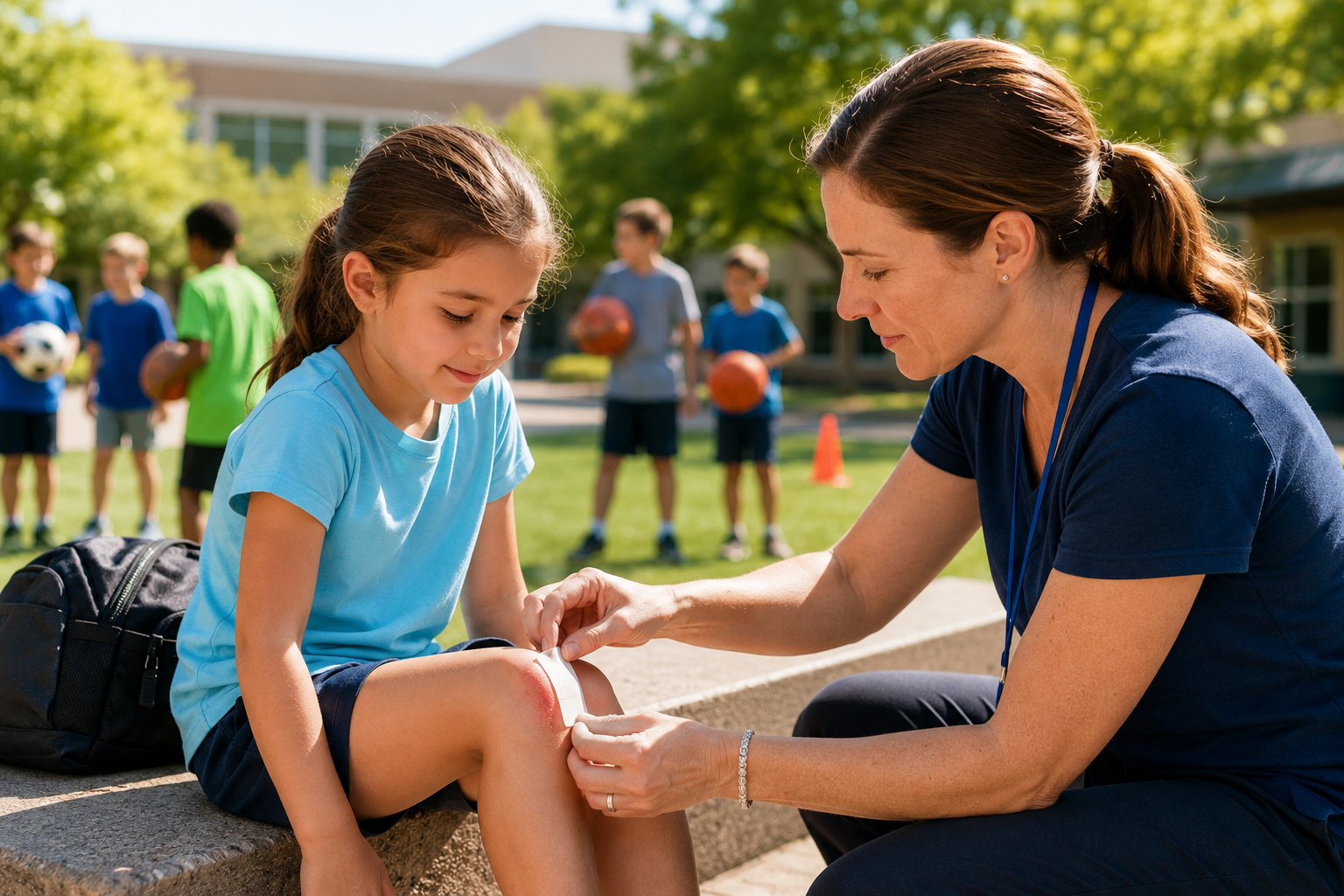
California workers’ compensation generally applies when an employee suffers an injury or illness connected to the job. Summer break does not automatically remove that protection. If the school employee is working, paid, scheduled, assigned, or otherwise acting within the scope of employment, the injury may qualify.
This can matter because school employees often work beyond the traditional academic calendar. Many California districts and schools run summer programs for:
Remedial classes
Credit recovery courses
Extended school year services
Special education programs
Athletic camps
Childcare and enrichment programs
Food service and nutrition programs
Campus cleaning, repair, and maintenance
Administrative enrollment and records work
Transportation services
Training, orientation, and planning sessions
A workers’ compensation claim does not usually depend on whether the program occurs in June, July, or August. It depends on the connection between the injury and the employee’s work duties.
For example, a teacher injured while setting up a summer classroom in Rancho Cucamonga may have a valid claim if the work was assigned or reasonably related to the summer program. A paraeducator hurt while assisting a student during an extended school year session in Santa Barbara may also have rights. A custodian injured while moving furniture for summer repairs may be covered, even if students are not on campus that day.
Choosing an Employment Law Attorney Recovering Damages in an Employment Law ClaimRelated Videos
Common Summer Program Injuries for School Employees
Summer programs can create a different workplace rhythm. Campuses may be less crowded, but staff may handle wider responsibilities, changing room assignments, outdoor activities, or student supervision outside the normal school year.
Common injuries may include:
Slip and fall injuries in classrooms, cafeterias, gyms, hallways, parking lots, or outdoor areas
Back, neck, shoulder, or knee injuries from lifting, bending, or moving supplies
Repetitive strain injuries from classroom setup, computer work, food preparation, or custodial tasks
Heat-related illness during outdoor supervision, athletic activities, or campus work
Injuries caused while assisting students with mobility, behavioral, or medical needs
Vehicle-related injuries involving school transportation or job-related travel
Stress-related or mental health claims when supported by California workers’ compensation law and medical evidence
Some injuries happen suddenly, such as a fall on a wet floor. Others develop over time, such as wrist pain from repetitive tasks or a back condition aggravated by years of lifting classroom materials. Both types of injuries may be worth discussing with a California workers’ compensation lawyer if symptoms affect work or medical care is needed.
Results
Who Counts as a Covered School Employee?
Many school workers assume workers’ compensation is only for full-time teachers. In California, coverage may extend beyond permanent classroom teachers. It may apply to a range of employees, including:
Teachers
Substitute teachers
Instructional aides
Special education aides
School nurses
Counselors
Office and administrative staff
Custodians
Groundskeepers
Food service workers
Bus drivers and transportation employees
Coaches and activity supervisors
Campus security or supervision staff
Part-time, seasonal, temporary, and short-term employees may also have rights, depending on the employment relationship and facts of the injury. A summer assignment may be temporary, but that does not automatically mean the worker is unprotected.
Independent contractor status can be more complicated. Some education workers are labeled as contractors for tutoring, coaching, therapy, consulting, or enrichment work. A label alone does not always control the legal analysis. If there is a dispute over whether someone is an employee, the details of control, pay, scheduling, duties, and the work relationship may matter.
For related guidance, workers can review the firm’s page on California workers’ compensation lawyers at https://www.myerslawgroup.com/california-workers-compensation-lawyers/.
What If the Summer Program Is Run by a Different Entity?
Some summer programs are operated directly by a school district. Others may involve a charter school, private school, nonprofit partner, staffing agency, city program, or outside vendor using school facilities.
This can raise questions about who the employer is and which insurance carrier should handle the claim. For example:
A teacher may work summer school through the same district.
An aide may be hired only for an extended school year program.
A coach may be paid through a booster-related or outside program.
A campus worker may be assigned through a staffing agency.
A counselor or specialist may provide services under a separate contract.
When multiple entities are involved, reporting the injury clearly becomes even more important. The employee should notify the supervisor or entity that assigned the work, request the workers’ compensation claim form, and keep records of who received notice.
If the employer refuses to provide paperwork or denies that the injury is work-related, the employee may find helpful information on the firm’s page about when an employer refuses to file a workers’ compensation report at https://www.myerslawgroup.com/employer-refuses-to-file-a-workers-compensation-report/.
Steps to Take After a Summer Program Injury
A school employee who is hurt during a summer program should act quickly and keep a clear record. Delays can create disputes about when the injury happened, whether it was connected to work, and whether the employer had proper notice.
Key steps include:
Report the injury to a supervisor as soon as possible.
Ask for a workers’ compensation claim form.
Write down the date, time, location, and what happened.
Identify witnesses, including coworkers, students, parents, or other staff.
Take photos of unsafe conditions when it is safe and appropriate.
Seek medical care and explain that the injury happened at work.
Keep copies of emails, incident reports, work schedules, texts, and medical notes.
Follow medical restrictions carefully.
A regular school-year employee should not assume that a summer injury is informal or outside the system. If the work was assigned, supervised, or connected to the school’s operation, the injury should be documented as a workplace injury.
For more detail on the reporting process, workers can visit https://www.myerslawgroup.com/reporting-a-workplace-injury/.
What Benefits May Be Available?
If a claim is accepted, California workers’ compensation benefits may help cover job-related medical care and some wage loss. The type and amount of benefits depend on the injury, medical findings, work restrictions, earnings, and other facts.
Potential benefits may include:
Medical treatment for the work injury
Temporary disability benefits if the employee cannot work or loses wages due to restrictions
Permanent disability benefits if the injury causes lasting impairment
Supplemental job displacement benefits in qualifying cases
Death benefits for eligible dependents in fatal work injury cases
For teachers and school employees, wage loss can be more complicated during summer. Some workers are paid only for summer assignments. Others have annualized pay, a ten-month contract, a separate summer stipend, or a substitute assignment. The way wages are calculated may affect temporary disability issues, especially if the injury prevents completion of the summer program or affects the return to regular school-year duties.
A teacher injured during July summer school may lose the summer assignment and later miss the start of the academic year. A bus driver injured during summer transportation work may have restrictions that carry into the fall route schedule. A cafeteria worker hurt during summer meal service may need modified duty when the main school year resumes. These details should be documented.
The firm provides more information about benefits at https://www.myerslawgroup.com/california-workers-compensation-lawyers/workers-compensation-benefits/.
Can a Claim Be Denied Because School Is Out?
A claim should not be denied simply because the injury occurred during summer. The employer or insurance carrier may investigate whether the worker was performing job duties, whether the worker was on the clock, whether the injury happened on school property, and whether the injury was caused by work.
Common denial arguments may include:
The employee was not scheduled to work.
The activity was voluntary or personal.
The injury happened before or after assigned hours.
The worker was employed by another entity.
The injury was not reported right away.
The injury was caused by a preexisting condition.
The employee was not acting within job duties.
A denial does not always end the matter. California workers may have options to challenge a denial, obtain medical evidence, and pursue a hearing if needed. The best response depends on the reason for denial and the available proof.
Documentation can make a major difference. Work schedules, summer program rosters, emails assigning duties, timesheets, badge records, witness statements, photos, medical reports, and communication with supervisors may help show the injury was connected to work.
Special Issues for Teachers and Education Staff
School employees often face circumstances that do not fit the usual office or warehouse injury model. Summer programs may involve smaller staff teams, mixed-age student groups, unfamiliar classrooms, and a blend of instruction, supervision, and physical tasks.
Consider these scenarios:
A special education aide is injured while helping a student transfer from a chair during an extended school year program.
A teacher falls while carrying supplies between temporary summer classrooms.
A coach suffers a knee injury while supervising a school-sponsored athletic camp.
A custodian strains his back while preparing classrooms for summer maintenance.
A school nurse is injured while responding to a student medical incident during a summer program.
An office employee develops wrist and hand pain while processing summer enrollment records.
Each example turns on the facts, but all involve a potential connection between job duties and injury. The claim may be stronger when the worker can show they were assigned to the program, acting under school direction, or performing tasks that benefited the employer.
What If the Injury Happens Off Campus?
Some summer education work happens outside the main school building. Field trips, athletic facilities, transportation routes, district offices, training locations, and off-site program spaces may still be work settings.
An off-campus injury may be covered if the employee was performing job duties or traveling for work as part of the assignment. For example, a teacher injured while supervising students on a summer field trip may have a different claim analysis than a teacher injured during a personal errand after leaving campus. A bus driver injured during an assigned summer route may have a clearer work connection than someone injured while commuting to work.
Off-campus claims often need careful fact development. The employee should preserve documents showing the assignment, location, schedule, and reason for being there.
Retaliation Concerns After Filing a Claim
Some school employees hesitate to report injuries because they worry about losing future summer assignments, substitute opportunities, coaching roles, or regular school-year placement. California law protects workers from retaliation for reporting a work injury or pursuing workers’ compensation benefits.
Possible warning signs may include sudden schedule removal, reduced hours, negative treatment after reporting, pressure not to file paperwork, or threats about future assignments. Not every unfavorable employment action is unlawful, but timing and context matter.
Workers who believe they were punished after filing a claim can review the firm’s resource on being fired after filing a workers’ compensation claim at https://www.myerslawgroup.com/fired-after-filing-a-workers-compensation-claim/.
When to Speak With a Workers’ Compensation Attorney
Not every minor injury requires legal representation. A brief cut, bruise, or strain that receives prompt care and fully resolves may be handled without a dispute. Legal guidance becomes more valuable when the injury is serious, the claim is denied, medical treatment is delayed, wage benefits are disputed, or the employer claims the worker was not covered during the summer program.
A lawyer can help by:
Identifying the correct employer or insurance carrier
Reviewing whether the injury is work-related
Helping gather evidence from the summer assignment
Addressing delays in medical care or benefits
Responding to claim denials
Preparing for hearings or appeals when needed
Protecting the worker from retaliation concerns
Summer program claims can involve unusual payroll records, short assignment periods, multiple employers, or questions about whether a worker was acting within job duties. Those issues can become stressful when the employee is also trying to recover.
The Myers Law Group represents injured workers across California, including employees in Rancho Cucamonga, Santa Barbara, and surrounding communities. The firm’s experience with California workers’ compensation and employment matters allows it to look at both the injury claim and related workplace concerns.
Speak With a California Workers’ Compensation Lawyer
If you were injured while teaching, supervising, driving, cleaning, preparing meals, providing student services, or performing other school-related work during a summer program, you may have rights under California workers’ compensation law. The most helpful first step is to document what happened, report the injury, and get medical attention.
The Myers Law Group offers a free consultation for California workers who need guidance after a job-related injury. To discuss your situation, visit https://www.myerslawgroup.com/contact/ and ask about your options.
This article is for informational purposes only and is not legal advice. Consult an attorney about your specific situation.